
Improve Planning and Execution in Construction With the Right Systems
- The gap between what gets planned and what actually gets delivered is one of the most consistent challenges in construction. Projects that start with well developed programmes and clear intentions drift from plan as work progresses. Deadlines that seemed achievable at kickoff become increasingly optimistic as the project encounters the reality that every construction project encounters.
- That drift is not inevitable. It is what happens when planning systems are not connected to what is happening on site and when execution does not feed information back into the plan in ways that allow the project to stay on course rather than discover it has gone off course too late to recover.
- Improving planning and execution outcomes require addressing both sides of that connection. Better planning that reflects how construction actually works rather than how it looks on a Gantt chart at project start. Better execution tracking that keeps the plan current and surfaces problems while they are still manageable.
Why Plans Drift From Reality
- Understanding why construction plans consistently diverge from execution is more useful than treating it as an inevitable feature of the industry that cannot be addressed.
- Plans are built on assumptions. Ground conditions that match the survey. Material deliveries that arrive when ordered. Subcontractors who are available when the programme requires them. Weather that allows work to proceed as planned. Each of these assumptions carries uncertainty that the initial programme often does not reflect honestly. When the assumptions prove wrong the plan diverges from reality and the divergence compounds as the project progresses.
- Plans are not updated frequently enough to reflect what is actually happening. A programme that is created at project start and reviewed monthly captures cumulative drift rather than identifying it as it occurs. By the time the monthly review reveals a problem the problem has often already affected multiple downstream activities in ways that are increasingly difficult to address.
- The people doing the work are not connected to the plan. A site supervisor who cannot easily access the current programme or update progress against it is a source of information that never reaches the planning system. The gap between what is happening on site and what the plan shows widens because the connection between the two is not maintained in real time.
- Changes happen but the plan does not reflect them. A variation that was instructed last week. A design change that affects the sequence of work. A subcontractor who needs to start earlier or later than planned. These changes need to flow through to the programme but when that process is manual and burdensome they often do not.
What Better Planning Actually Looks Like
- Improve planning and execution starts with planning that is honest about uncertainty rather than presenting a single deterministic timeline that does not reflect the variability inherent in construction work.
- Dependency mapping that reflects physical reality. Not just which tasks follow which in a logical sequence but which tasks are genuinely constrained by what happened before them. Concrete that cannot be loaded until it has cured to the required strength. Electrical rough in that cannot happen until the structural frame is complete. These are not preferences. They are physical constraints that the plan needs to enforce rather than leaving to the team to track.
- Resource planning that reflects actual availability rather than assumed full productivity. Subcontractors who are working across multiple projects. Shared plant and equipment that needs to be allocated. Key personnel whose availability affects multiple activities. Plans that account for these constraints produce timelines with a realistic basis rather than ones that assume resources that are never fully available.
- Buffer allocation that reflects where the programme is most exposed to uncertainty rather than applying contingency uniformly. Activities on the critical path that have high uncertainty deserve more buffer than those with float. Activities that depend on external parties carry more risk than those under the direct control of the principal contractor.
- Programme updating that happens continuously rather than periodically. A plan that is updated daily or weekly to reflect what actually happened rather than monthly to record what the programme now shows produces a current picture of project status that allows responsive management rather than reactive recovery.
What Better Execution Tracking Requires
- Better execution cannot happen without the information flow that connects what is happening on site to the people who need to know about it and to the planning system that should reflect it.
- Progress updates that come from the people doing the work rather than from the project manager’s interpretation of what they were told in a phone call. A site supervisor who can update progress directly from a phone on site in thirty seconds produces more current and more accurate information than one who reports at the end of the day through a chain of communication that introduces delay and interpretation at every step.
- Issue identification that happens when issues arise rather than when they have already caused problems. A platform that makes flagging a problem as easy as sending a message creates the culture of early reporting that allows problems to be managed rather than allowed to develop. One that requires formal reporting through a cumbersome process creates the culture of hoping things resolve themselves that allows small problems to become large ones.
- Look-ahead planning that extends beyond the current week to identify what is coming and whether the conditions for upcoming activities are in place. Materials that need to be ordered. Subcontractors that need to be confirmed. Inspections that need to be booked. Plant that needs to be arranged. A two or three week look-ahead that is maintained as a live document rather than a periodic review catches these preparation failures before they cause programme delay.
- Real time visibility for everyone who needs it. The project manager can see the current state of the project from a phone anywhere rather than only when they are physically on site or in front of a desktop. The client who can see progress without requiring a site visit or a formal report. The subcontractor who can see their upcoming schedule without calling the office.
The Connection Between Planning and Financial Control
- Planning and financial control are more directly connected than they are often managed. Programme slippage has financial consequences. Cost overruns have programme implications. Managing them through separate systems that are never quite reflecting the same project reality creates the gaps where problems develop without anyone having the complete picture.
- A programme that shows activities running late tells a financial story. Preliminaries that are running longer than planned. Prolongation costs that are accumulating. The opportunity to claim extension of time that depends on the programme record being current and accurate. These financial implications of programme performance are only manageable when the programme is being maintained properly rather than being assembled retrospectively.
- A cost overrun that is visible in real time rather than at monthly valuation tells a programme story. Work that is taking longer than estimated and that therefore affects what comes next. Resources that are being consumed faster than planned and that will not be available for later activities. The programme implications of cost performance are only visible when cost tracking and programme tracking are connected rather than managed in isolation.
The Technology That Connects Planning and Execution
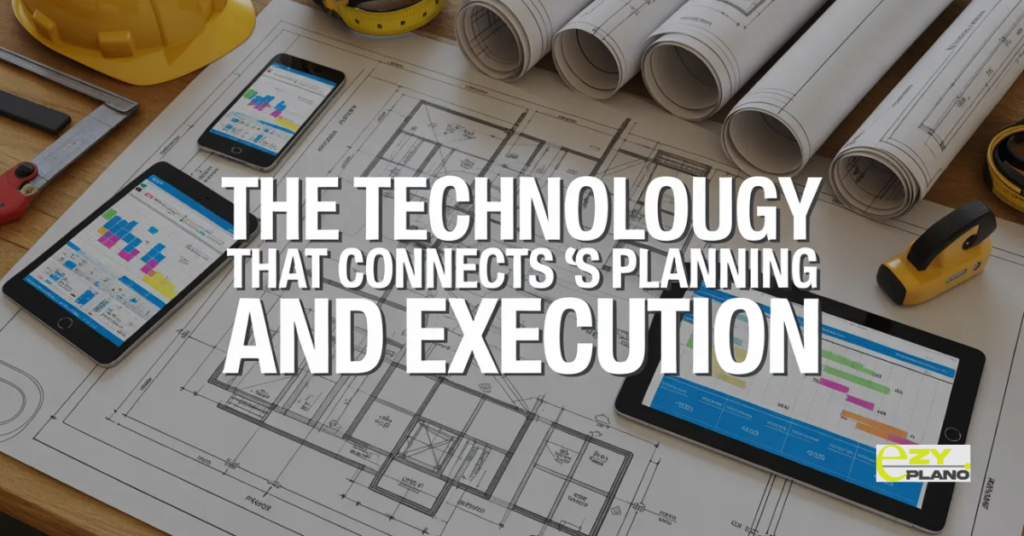
- Improve planning and execution at the level that changes project outcomes requires technology that supports the connection between planning and site rather than creating a plan that exists in one system and execution that exists in conversations and site diaries that never feed back into the plan.
- A platform that the site team can engage with directly from the field without requiring a desktop computer or specialist training. A mobile experience that is designed for use in site conditions including poor connectivity, time pressure and the physical environment of an active construction site.
- A planning tool that updates automatically when dependencies are affected rather than requiring manual recalculation of the whole programme every time something changes. When one activity slips the downstream implications are visible immediately rather than after someone has worked through the programme logic by hand.
- A system that connects the planning function to document management so that when drawings are revised the activities that depend on them are flagged rather than the revision being processed in isolation from the programme it affects.
- EZY PLANO is a platform built for construction businesses that want planning and execution connected in a way that keeps the plan current and the project on course rather than managing them as separate functions that are reconciled periodically when the gap between them has already become significant.
Questions Worth Asking
How do we get site teams to update progress consistently when they are focused on the work rather than the administration?
- Making updates takes less time than the alternative. Progress updates that take thirty seconds on a phone get done. Those that require navigating multiple systems do not. The update experience determines whether information flows from site into the planning system or stays in the site supervisor’s head.
How do we handle the programme impact of changes without rebuilding the whole schedule every time something shifts?
- Planning tools that understand dependencies and cascade changes automatically through the programme reduce the management overhead of programme changes. Manual recalculation every time something shifts is the reason programmes stop being maintained when projects get busy.
How do we keep the plan honest when there is pressure to show progress that has not actually happened?
- Build reporting around what the data shows rather than what the team wants to report. A planning system that connects to actual site records rather than to manually entered progress makes it significantly harder to report optimistically without that optimism being visible in the data.
