
Construction Project Planning Software Before Breaking Ground
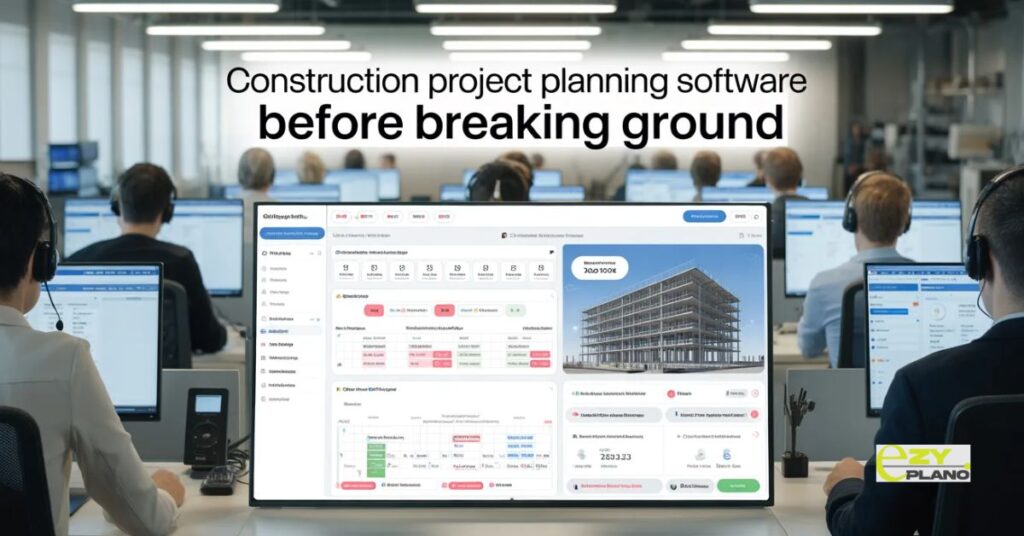
Planning construction projects on napkins and gut feeling works until it doesn’t. Underestimated timelines, overlooked dependencies, resource conflicts discovered mid-project. Construction project planning software catches problems during the planning phase instead of expensive discovery on job sites, and contractors using it stop repeating the same mistakes project after project.
Most builders plan based purely on experience. Worked on similar projects before, know roughly how long things take, and assign resources accordingly. Experience helps but memory fails.
The Planning Phase Importance
- Planning happens before the first shovel hits dirt. Timeline development, resource allocation, budget estimation, risk identification. Foundation for everything following.
- Construction project planning software documents decisions and captures lessons. Not just creating plan but learning from history. Each project teaches software about your operation.
- The difference between planning from memory versus data changes accuracy dramatically.
Why Construction Planning Differs
- Every project is somewhat unique. Different site conditions, various requirements, specific challenges. Can’t just copy previous plans exactly.
- But patterns exist across projects. Concrete takes similar time regardless of project. Inspection processes follow standard sequences. Trade dependencies remain consistent.
- Software recognizes patterns while accommodating uniqueness. Applies learned lessons to new situations. Experience is captured systematically, not locked in people’s heads.
- When an experienced PM leaves, knowledge shouldn’t walk out the door with them.
Core Planning Capabilities
- Task breakdown and sequencing. Define work packages, establish order, identify dependencies. Logical flow from start to finish.
- Resource requirement estimation. Labor needs, equipment requirements, material quantities. Calculate what’s necessary to complete work.
- Timeline development with dependencies. Task durations considering constraints. Critical path showing what can’t be delayed.
- Budget allocation across phases. Cost estimates by work package. Financial planning aligned with construction sequence.
- Risk identification and mitigation. What could go wrong, how likely, what impact. Proactive problem anticipation.
- Scenario comparison for decisions. Test different approaches seeing implications. Informed choices about methodology and timing.
Different Project Types
- Residential construction planning homes. Standard processes but site-specific variations. Applying proven patterns with customization.
- Commercial building complex structures. Multiple systems, various trades, regulatory requirements. Coordination intensity requires detailed planning.
- Renovation projects with unknowns. Existing conditions discovered during work. Flexible planning accommodates surprises.
- Infrastructure work like roads or utilities. Long linear projects, right-of-way issues, public coordination. Different planning considerations than vertical construction.
- Tenant improvements in occupied buildings. Work around business operations, limited hours, minimal disruption. Constraints affecting planning approach.
Planning Best Practices
- Start with accurate site assessment. Understand conditions before planning. Assumptions about the site cause expensive surprises.
- Build in realistic contingency. Things go wrong on construction projects. Planning for perfection guarantees disappointment.
- Involve key trades during planning. Experienced subs spot issues early. Their input prevents planning mistakes.
- Plan permitting and inspection timelines. Regulatory processes take time. Include government approval sequences in schedule.
- Consider weather impacts appropriately. Outdoor work is affected by seasons. Regional climate patterns inform realistic planning.
- Document assumptions clearly. What are you assuming about conditions, availability, productivity? When assumptions prove wrong, adjust plans accordingly.
Common Planning Mistakes
- Over-optimistic duration estimates. Best-case scenarios become the plan. Reality never matches perfect conditions.
- Ignoring seasonal factors. Scheduling concrete in winter or roofing during the rainy season. Weather impacts dismissed during planning.
- Underestimating permit timelines. Assuming quick approvals. Government processes take longer than hoped.
- Forgetting the learning curve on complex work. First-time installations take longer. The experience curve affects productivity.
- Planning without verifying availability. Assuming equipment or subs will be available. Checking availability during execution too late.
- Skipping what-if scenarios. Single plan with no alternatives. No backup when the original approach hits problems.
Software Selection Factors
- Construction-specific versus generic tools. Purpose-built for building or adapted from general project management. Industry knowledge baked in matters.
- Estimating integration is important. Planning connects to budgeting. Separate systems create reconciliation headaches.
- Historical data utilization. Does software learn from completed projects? Improving estimates over time is valuable.
- Collaboration features for team input. Plans developed with input from multiple stakeholders. Solo planning misses critical perspectives.
- Mobility for site access. Review plans at job sites. Desktop-only limits usefulness for field-oriented work.
- Reporting for client communication. Professional presentations showing timeline and progress. Client confidence from organized planning.
Learning From History
- Track planned versus actual durations. What took longer or shorter than estimated. Pattern recognition improving future estimates.
- Document why variances occurred. Weather delays versus productivity issues versus scope changes. Understanding causes enabling better planning.
- Capture successful strategies. What worked well is worth repeating. Institutional knowledge preserved systematically.
- Note avoided mistakes. Near misses prevented by planning. Recognize the value of planning beyond obvious benefits.
- Improve estimating over time. Accuracy increases as the database grows. Software gets smarter about your specific operation.
Integration With Operations
- Planning feeds into scheduling. Strategic plan drives daily work assignments. Connection between phases prevents disconnect.
- Budget alignment with plan. Cost tracking against planned expenditures. Financial performance visible throughout the project.
- Material procurement timing. Order based on planned installation dates. Coordination prevents shortages or premature deliveries.
- Subcontractor coordination. Subs scheduled based on plan progress. Clear communication about timing expectations.
- Client reporting using a plan. Progress measured against planned milestones. Professional updates build confidence.
EZY PLANO For Construction Planning
- Platforms like EzyPlano design planning tools specifically for construction reality. Not generic project management adapted for building. Purpose-built understanding construction workflows.
- What makes EzyPlano effective? Construction-specific features like trade dependencies, weather impacts, inspection sequences. Learning from historical projects improves future plans. Built for how contractors actually plan work.
- For builders wanting better planning without construction management degrees, solutions like this work. Professional planning capabilities without overwhelming complexity.
- Construction project planning software succeeds when it improves planning accuracy and efficiency. Good software learns from experience making better predictions. Bad software just documents guesses without adding intelligence.
- Better planning means fewer surprises, realistic timelines, and achievable budgets. Plans should set projects up for success not just satisfy planning requirements.
Questions About Planning Software
How detailed should construction plans be before starting work?
- High-level phases and major milestones initially. Detail the next few weeks deeply, later phases lightly. Progressive elaboration as work approaches prevents wasted detailed planning that changes anyway.
Can software really predict construction timelines accurately?
- Better than guessing but not perfectly. Accuracy improves with historical data. Expect 80-90% accuracy on well-planned work. Novel situations always carry uncertainty requiring contingency.
Do we need different planning for different project sizes?
- Small projects need simpler planning, large projects need more detail. But the principles are the same, sequence, resources, dependencies, timeline. Scale the approach to project complexity not company size.


