
Construction Planning Software 2026 That Keeps Projects on Track
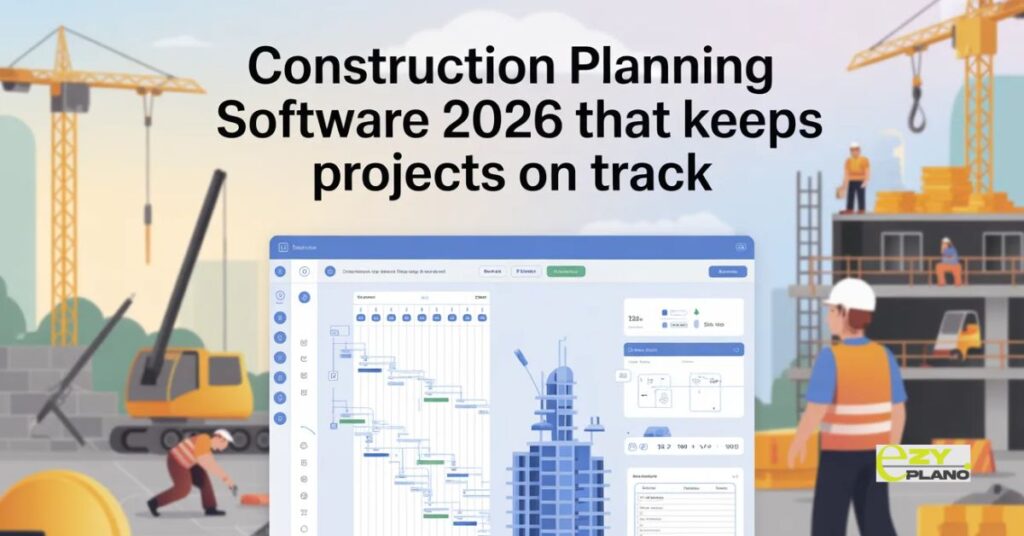
- Construction planning technology has moved forward meaningfully in recent years. The platforms available in 2026 are genuinely more capable than what existed previously. Better mobile experiences built for site use rather than adapted from desktop interfaces. AI features that are beginning to deliver practical planning value rather than appearing primarily in marketing material. Integration between planning and the broader project management ecosystem that reduces the manual reconciliation work that used to sit between disconnected systems.
- That progress creates a more complex evaluation challenge. More capable options across more of the market means fewer platforms that can be dismissed without serious consideration and more that require proper evaluation against specific operational requirements.
- Finding the right fit among construction planning software 2026 options requires a clearer understanding of what a specific construction business actually needs from its planning tools than it did when the choices were more limited and the differences between platforms were more obvious.
What Has Changed in Construction Planning Technology
- The most significant development in construction planning technology over recent years is how the gap between enterprise platforms and what growing businesses can access has narrowed.
- Capabilities that previously required enterprise investment and dedicated planning specialists are increasingly available at price points that growing construction businesses can justify. Real time programme visibility across multiple concurrent projects. Mobile access that works properly in active site conditions rather than being a scaled down desktop experience. Integration with procurement, document management and financial systems that creates a connected project information environment rather than isolated planning data.
- AI assisted planning is the area of most active development in 2026. Not AI that generates programmes from scratch but AI that improves how existing programmes get built and maintained. Risk identification that flags activities with characteristics that historically correlate with delay. Resource conflict detection that surfaces overallocation before it affects delivery. Progress prediction that shows where a project is heading based on current trajectory rather than just where it was planned to be.
- These capabilities vary significantly in maturity across different platforms. Some have integrated AI in ways that deliver genuine daily value to planning teams. Others have added AI labels to existing functionality without meaningfully changing what the planning software actually does. Evaluating which category a specific platform falls into requires testing beyond the demonstration.
The Platforms Worth Knowing
- Understanding where established platforms sit helps clarify what each one is and is not suited for.
- Oracle Primavera P6 remains the reference point for complex programme management. Large scale infrastructure and engineering projects with thousands of activities and significant resource management requirements. The depth of scheduling capability is genuine and for the projects it was built for it is hard to match. The learning curve and implementation investment required position it firmly for organisations with dedicated planning functions. Not a realistic option for businesses without that resource regardless of project complexity.
- Asta Powerproject is widely used in UK construction. Strong scheduling capability for construction specific workflows. The dependency mapping and resource management tools are well developed for the types of projects UK contractors typically manage. More accessible than Primavera for businesses without dedicated planning specialists while offering more construction specific depth than generic project management tools.
- Microsoft Project remains present in many construction businesses primarily because it is already available through Microsoft licences. The scheduling capability is adequate for straightforward projects. The construction specific features are limited and the mobile experience does not serve site teams well. Often used because it is familiar and available rather than because it is the best fit.
- Procore includes planning functionality within its comprehensive construction platform. The integration between planning and the broader project management capability is genuine. For businesses using Procore across their operation the planning tools are a natural extension. For those evaluating planning capability specifically the Procore package commitment may not be justified by the planning functionality alone.
- EZY PLANO occupies the space that growing construction businesses actually need. Past the point where basic tools are adequate. Not yet at the scale where enterprise complexity and dedicated planning resources make sense. Construction specific planning capability that the whole team can use without specialist training. AI features that deliver practical value from the point of adoption. Mobile access built for site use. Integration with document management and team coordination rather than planning as an isolated function.
What 2026 Buyers Should Priorities
- The criteria that matter most when evaluating construction planning software 2026 options reflect how construction work actually happens rather than what looks impressive in a controlled demonstration.
- How the platform handles change matters more than how it handles a stable programme. Every construction project changes. Deadlines move. Subcontractors run ahead or behind. Deliveries arrive late. Design changes affect the sequence of work. A planning tool that makes responding to these changes straightforward will be used consistently. One that makes replanning feel like rebuilding from scratch will be worked around and the programme will drift from reality.
- Mobile experience on an active construction site is the test that determines field adoption. Put the platform on a phone and perform the tasks a site supervisor actually needs to do. Updating progress. Accessing current drawings. Checking scheduled activities for tomorrow. Logging an issue. If those tasks are not genuinely straightforward in real site conditions the platform will not be used consistently by the people who need it most regardless of how capable it is at a desk.
- Subcontractor access that is genuinely simple. External parties who can view their schedule and update their progress without navigating a full project management platform engage with the system. Those who cannot revert to phone calls and messages that bypass the system entirely. The coordination benefits that make planning software worth having only materialise when everyone who needs to be in the system actually uses it.
- Construction specific dependency management. The ability to map trade sequencing and physical dependencies in ways that reflect how construction actually works rather than how a generic task management system assumes work flows. Concrete curing before formwork removal. Structural completion before services installation. Finishes after mechanical and electrical rough in. These constraints need to be understood by the planning tool and enforced in the programme.
- AI features that are specific rather than general. The AI capabilities worth prioritising in 2026 are the ones that produce specific actionable outputs. A risk flag that identifies exactly which activities are affected by a resource conflict. A delay indicator that explains what pattern is driving the concern. Progress prediction that shows which milestones are at risk and by how much. General AI that produces vague suggestions without specific guidance adds noise rather than value.
The Data Foundation That AI Requires
- AI planning features in construction planning software 2026 vary significantly in how much value they deliver depending on the data available to the system.
- Platforms that have accumulated project data across large user bases can offer AI features that leverage patterns across many projects even before a specific business has built its own project history. Risk identification based on programme characteristics that correlate with delay across the platform’s project portfolio is useful from day one.
- Platforms that learn from a specific business’s project history deliver more accurate predictions over time as more data accumulates. The predictions become calibrated to how that specific business and its supply chain perform rather than reflecting generic patterns that may not match the specific operational context.
- Both approaches deliver value. Understanding which approach a specific platform uses and what that means for how quickly AI features deliver useful outputs informs realistic expectations about what the platform will deliver from the start versus what it will deliver as the data foundation builds.
The Integration Picture
- Construction planning software 2026 that sits in isolation from the rest of the project management environment creates gaps that require manual effort to bridge and that result in information being out of sync across different systems.
- A programme that does not connect to the document management system does not automatically flag when a drawing revision affects planned work. The project manager has to track that connection manually and the risk of missing a change that affects the programme is real.
- A programme that does not connect to the procurement system does not show when a material delivery date has changed and what that means for the scheduled work that depends on it. The delay gets discovered when the crew arrives to do work that the materials have not arrived for rather than when the delivery date changed and there was still time to adjust the programme.
- A programme that does not connect to the financial system requires manual reconciliation between where costs are tracked and where the programme lives. The two pictures drift apart and producing an accurate view of project performance requires assembling it from separate sources rather than reading it from a connected system.
Making the Right Decision
- Construction planning software 2026 decisions made on demonstrations and feature lists alone produce worse outcomes than those made on real project trials and honest assessment of how the team actually works.
- The trial on a live project matters more than any other part of the evaluation. Run the platform on an active project with real complexity. See how the site team interacts with it in actual site conditions. Watch where updates happen naturally and where they get skipped. Identify where the programme stays current and where it starts drifting because updating it is more effort than the alternative.
- That experience tells you more about whether the platform will actually be used consistently than any amount of time spent in a vendor demonstration where everything is prepared to look as good as possible under ideal conditions.
- EZY PLANO is a platform built for construction businesses that want planning tools matched to how they actually build. Practical capability that the whole team uses rather than sophisticated features that only the planner understands. Built for the realities of construction planning in 2026 rather than the idealized project conditions that enterprise platforms were designed around.
Questions Worth Asking
How do we evaluate whether a platform’s AI features are genuine or primarily marketing?
- Ask specifically what the AI produces, what data it uses and what changes when the AI feature is enabled versus disabled. Genuine AI features produce meaningfully different and more useful outputs. Marketing labels on existing features do not produce output that is distinguishably better.
What is the realistic mobile experience for site supervisors and subcontractors?
- Test it in site conditions not in an office. Real site conditions including unreliable connectivity, bright sunlight and time pressure reveal the mobile experience that field teams will actually encounter rather than the one that works perfectly under ideal conditions.
How do we handle the transition from our current planning approach without disrupting active projects?
- Start new projects on the new platform while completing active ones through the current approach where practical. Building familiarity on new projects before the new system is carrying the full portfolio reduces the risk of transition disruption affecting project delivery.


