
All-In-One Project and Job Management Software for Construction Teams
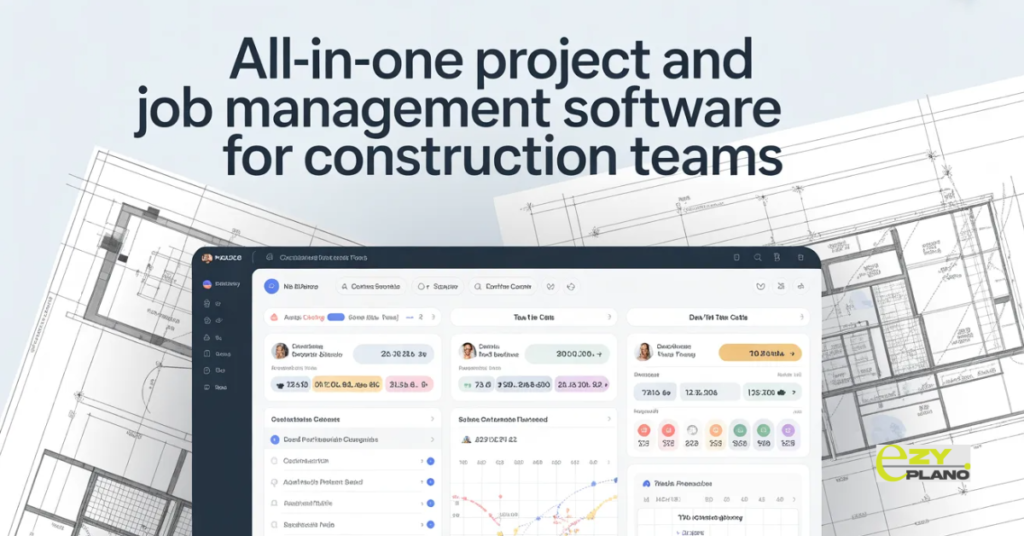
- The appeal of all-in-one software is straightforward. One platform. One place where everything lives. No manual transfer of information between systems. No version confusion when the project schedule and the financial tracking are pulling from different sources. No team members checking three different tools to assemble a picture of where a project stands.
- That appeal is genuine and the frustration it responds to is real. Construction businesses managing projects across disconnected systems spend significant management time reconciling information that should be automatically consistent. The project manager who updates the schedule in one system and then updates the financial forecast in another because they do not connect is doing work that a properly integrated system would eliminate.
- All-in-one project and job management software that actually delivers on this promise reduces that reconciliation overhead in ways that matter operationally. The question is what all-in-one actually means in practice and whether a specific platform’s version of it covers the specific functions that a specific construction business needs.
What All-In-One Actually Covers
- The all-in-one label gets applied to platforms with significantly different coverage. Understanding what a specific platform includes and excludes before evaluating it prevents discovering gaps after adoption has already happened.
- The functions that matter most for construction projects and job management include project scheduling with construction specific dependency management. Job costing and financial tracking that connects costs to projects in real time. Document and drawing management that keeps everyone working from current information. Resource and workforce management that tracks who is doing what across projects. Customer and client management that maintains the relationship context alongside the project information. Estimating and quoting that connects bid preparation to project delivery. Invoicing and payment management that closes the financial loop from estimate through to payment received.
- No single platform covers all of these functions at the same level of depth. The all-in-one platforms that serve construction businesses well cover the core functions adequately and integrate them genuinely rather than nominally. The ones that over-promise cover many functions superficially without the depth that real construction project management requires in any of them.
The Platforms Worth Knowing
- Procore is the most comprehensive construction specific platform in this category. Project management. Financial management. Quality and safety. Field management. Document control. The breadth of coverage and the depth within each function is genuine. The integration between functions is real rather than nominal. A variation instructed in the project management function appears in the financial management function automatically rather than requiring manual transfer.
- The trade off is the enterprise positioning that comes with that comprehensiveness. Cost that reflects the platform’s scale. Implementation complexity that requires dedicated resources and extended timelines before the platform is delivering value. Operational management that requires ongoing attention from someone who understands the platform deeply. For large construction businesses with the scale to justify the investment Procore delivers what it promises. For growing businesses the cost and complexity may exceed what the scale of their operations justifies.
- Buildertrend serves residential construction specifically with all-in-one coverage that reflects how residential construction businesses actually operate. Project scheduling alongside client communication. Job costing connected to the project plan. Subcontractor management. Selections and change order management that reflects the residential construction workflow. The client portal that keeps homeowners informed without requiring the project manager to prepare separate communications.
- The residential construction focus means that the platform reflects the specific functions residential contractors need rather than the broader construction management requirements of commercial contractors. Businesses whose work is primarily residential find the coverage more natural than those who work across both residential and commercial.
- CoConstruct serves custom home builders and remodelers with similar all-in-one coverage to Buildertrend but with particular depth in the estimating and financial management functions. The connection between initial estimate and project cost management is tighter than most platforms manage. For custom home builders where financial accuracy on individual builds is commercially critical that depth delivers genuine value.
- Jobber serves trade and field service businesses with all-in-one coverage of quoting, scheduling, job management, invoicing and client communication. The coverage reflects how trade service businesses operate rather than how construction project businesses operate. For HVAC, plumbing, electrical and similar trade businesses whose work involves service calls and smaller jobs rather than large construction projects Jobber serves the all-in-one requirement well. For construction businesses managing larger multi-trade projects the platform’s field service origins show limitations.
- Tradify serves trade businesses with simpler project types than the major construction platforms address. Quoting. Job scheduling. Time tracking. Invoicing. The simplicity that makes it accessible to small trade businesses is also the characteristic that limits it when project complexity grows beyond straightforward job management.
- EZY PLANO serves growing construction businesses that need project and job management coverage that reflects construction specifically without enterprise complexity. Project scheduling with construction dependency management. Document and drawing management connected to the schedule. Resource coordination across teams and subcontractors. Financial tracking that connects costs to projects in real time. Client communication that keeps stakeholders informed without requiring separate report preparation.
- The integration between these functions reflects how construction project management actually works rather than how a general business management platform assumes projects work. A drawing revision that flags its programme implications. A cost overrun that surfaces against the project budget. A subcontractor confirmation that updates the schedule. These connections are built into how the platform works rather than requiring the project manager to manually maintain consistency between separate functions.
The Integration That Makes All-In-One Valuable
- The value of all-in-one project and job management software comes from genuine integration between functions rather than from the presence of many functions in the same platform.
- Nominal all-in-one platforms house multiple functions under the same brand and the same login without those functions genuinely sharing data in real time. The project schedule and the job costing sit in the same platform but do not automatically reflect changes in each other. The document management and the project programme coexist but a drawing revision does not automatically flag the programme activities it affects.
- These nominal integrations reduce the number of different platforms a business uses without eliminating the manual reconciliation between functions that integration is supposed to address. The project manager still has to update the schedule and then update the financial forecast because they do not automatically connect even though they are on the same platform.
- Genuine all-in-one integration changes how information flows between functions. A cost event recorded in job costing appears automatically in the project financial position without manual re-entry. A programme change updates the resource requirements automatically without the resource plan needing to be separately adjusted. A client approval recorded in client communication updates the project status without the project manager manually reflecting it in the project plan.
- The test of genuine versus nominal integration is specific rather than based on feature lists. Does updating the schedule automatically update the financial forecast for time-related costs. Does recording a variation in client communication automatically create a cost event in job costing. Does a drawing revision automatically flag the programme activities that depend on it. These specific integrations are the ones that eliminate the reconciliation overhead that all-in-one platforms are supposed to address.
What All-In-One Does Not Solve
- All-in-one project and job management software addresses the information fragmentation problem when it is implemented and used consistently. It does not address the process discipline that information consistency requires.
- A platform where the team updates some functions and not others produces partial information that is sometimes more misleading than no information because it creates the appearance of a current picture that is actually incomplete. The schedule that is current but the job costing that has not been updated for two weeks looks like a project that is on programme and on budget when the reality may be different.
- Getting genuine value from all-in-one platforms requires the team discipline to keep all functions current rather than adopting the platform selectively. That discipline is easier to maintain when updating functions is straightforward rather than burdensome. Platforms that make updates quick and easy from the devices and in the conditions where the team is working get used consistently. Those that add friction to updates get used selectively and the integration value deteriorates as some functions stay current and others fall behind.
The Field Team Connection
- All-in-one project and job management software for construction that works only in the office addresses half the project. The work happens on site. The information that determines whether the all-in-one picture is current comes from the field.
- Progress updates that come directly from site rather than through the project manager as intermediary are more current and more accurate than updates assembled from phone calls and site visits. Issues logged at the location where they appear with photographs taken at the time are more useful than issues described in end of day reports. Subcontractors checking their schedule from a phone rather than calling the office reduces the coordination overhead that falls on the project manager.
- All-in-one platforms that provide field access through interfaces that work in real site conditions get the field information that makes the integrated picture accurate. Those that require desktop access or that provide mobile interfaces that do not work in poor connectivity conditions get field information only when the field team has time to enter it from an office environment, which is rarely when the information is most current.
Getting the Right All-In-One Platform

- The evaluation of all-in-one project and job management software that produces good outcomes starts with the specific functions the business needs covered and the specific integrations between those functions that would eliminate the manual reconciliation currently consuming management time.
- Not which platform has the most functions. Not which platform has the most impressive demonstration. Which platform covers the specific functions in a way that is deep enough to serve the actual requirements and integrates them in a way that is genuine rather than nominal.
- EZY PLANO is built for construction businesses that need the core project and job management functions integrated genuinely rather than nominally. Scheduling, document management, resource coordination and financial tracking that stay aligned automatically rather than requiring manual reconciliation. Built for the construction specific requirements that general business management platforms consistently underserve and at a price point and implementation complexity that reflects growing construction businesses rather than enterprise operations.
Questions Worth Asking
How do we evaluate whether a platform’s all-in-one integration is genuine rather than nominal?
- Test specific integration scenarios during evaluation rather than accepting feature list claims. Update a schedule activity and check whether the financial forecast updates automatically. Record a variation and check whether it appears in both the project management and the financial management functions without manual transfer. These specific tests reveal whether integration is real.
What functions does our business actually need in an all-in-one platform versus what would be nice to have?
- List the specific functions that current management overhead comes from maintaining across separate systems. Those are the functions that genuine integration would address. Everything else is additional capability that may or may not be worth the complexity it adds.
How do we ensure the team actually uses all the functions rather than selectively adopting the ones they find most useful?
- Choose a platform where updating all functions is fast enough to happen as part of how the work gets done rather than as a separate administrative task. The friction of updating determines whether the team keeps all functions current or selectively maintains the ones they find least burdensome.
