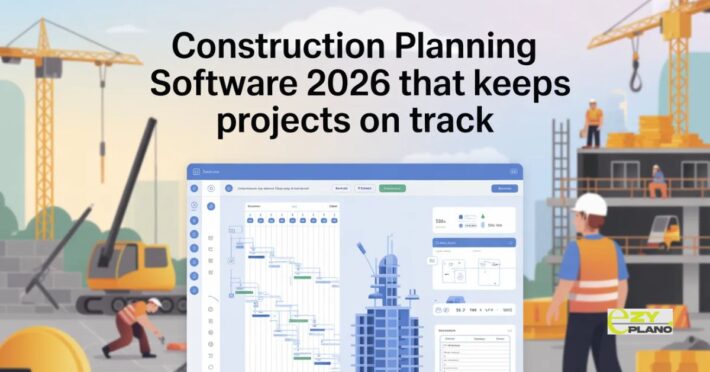
Planning Software Project Decisions That Actually Matter

- Every team that has ever struggled with a failing project has asked the same question at some point. How did we get here without seeing it coming?
- The answer is almost always the same. Not bad intentions. Not lack of effort. A planning process that looked adequate on paper but did not keep pace with what was actually happening as the project progressed.
- Planning software project tools exist to close that gap. To keep the plan connected to reality rather than letting it drift into fiction while the team carries on working against a schedule that stopped reflecting the project weeks ago.
Why Projects Drift From the Plan
- A project plan that everyone believes in at kickoff rarely survives the first month intact.
- Requirements get clarified and turn out to be more complex than assumed. A dependency that seemed stable shifts. A team member gets pulled onto something else for a week. Each change is small enough to absorb without formally updating the plan.
- Then several of those small changes compound. The plan is still showing the original timeline. The work is three weeks behind it. Nobody quite knows when it happened because each individual adjustment felt manageable at the time.
- Planning software project tools that make it easy to update the plan as things change prevent this accumulation. Not by making projects immune to change but by making change visible immediately rather than allowing it to build up unacknowledged until the gap between plan and reality becomes impossible to ignore.
What the Plan Is Actually For
- A project plan is not a commitment that the future will unfold in a specific way. It is a tool for making decisions.
- When the plan is current it answers the questions that actually drive project decisions. If this task slips by three days what gets affected. If a resource is unavailable next week what are the options. If a new requirement comes in where does it fit and what does it displace?
- A plan that is not current cannot answer these questions reliably. Decisions get made on assumptions rather than information. The team is navigating without a map that reflects the actual terrain.
- This is where planning software project tools earn their place. Not in producing beautiful Gantt charts that get presented at kickoff. In staying accurate enough throughout the project that the decisions made against them are genuinely informed.
The Dependency Problem
- Dependencies are where most project plans fall apart.
- Identifying which tasks depend on others seems straightforward. In practice it gets underestimated consistently. Teams map the obvious dependencies and miss the less visible ones. The ones that only become apparent when a task that should be independent turns out to require something else to be finished first.
- When a dependency that was not mapped causes a delay the impact is harder to absorb than when it was anticipated. The plan did not account for it. The team does not immediately understand what else is affected. Time gets lost figuring out the implications rather than responding to them.
- Good planning software surfaces dependencies clearly and shows the downstream impact of any change immediately. A slip in one task does not require manual recalculation to understand its effect on everything connected to it.
Resources and Reality
- Project plans that do not account for how resources are actually being used produce timelines that look achievable and are not.
- A task estimated at three days assumes the person doing it has three days available. If they are also managing two other things simultaneously the three days become five. If they are on leave next week it will become longer still.
- Resource availability is one of the most consistently underestimated variables in project planning. Not because teams do not know about it but because it is tedious to account for properly and easy to approximate with optimistic assumptions.
- Planning software project tools that connect task estimates to actual resource availability produce timelines with a realistic basis rather than ones built on the assumption that everyone has full capacity all the time.
When the Plan Needs to Change
- The test of a planning tool is not how it handles a project that unfolds exactly as planned. It is how it handles a project that does not.
- A requirement changes significantly mid project. A key team member becomes unavailable. An external dependency slips. These are not exceptional circumstances. They are normal features of any project of meaningful complexity.
- A planning tool that makes replanning difficult creates incentives to absorb change informally rather than updating the plan properly. The plan drifts further from reality. The team loses confidence in it as a useful guide. Eventually it gets ignored entirely and coordination reverts to informal channels.
- A tool that makes replanning straightforward keeps the plan alive as a working document rather than a historical artefact from before things got complicated.
Getting More From Planning Software Project
- The teams that get genuine value from planning tools share a common characteristic. They treat the plan as something that belongs to everyone rather than something the project manager maintains in isolation.
- When the team updates their own progress the plan reflects reality. When changes are communicated through the tool rather than in separate conversations the impact is immediately visible to everyone. When the plan is genuinely current it gets consulted rather than bypassed.
- Planning software project tools only deliver their potential when the whole team uses them consistently. That consistency depends on the tool being simple enough to update without it feeling like extra work on top of the actual work.
- EZY PLANO is a platform built for teams that want planning to work as a genuine shared tool rather than a management overhead. Designed around the reality of how projects actually progress rather than how they look in a kickoff presentation.
Questions Worth Asking
How do we keep the plan current when the team is too busy to update it?
- Making updates takes less time than avoiding it. If logging progress takes thirty seconds it happens. If it requires navigating multiple screens it does not.
What is the right level of detail in a project plan?
- Enough to make dependencies visible and estimates meaningful. Not so much that maintaining the plan becomes a project in itself.
How do we handle stakeholders who treat the original plan as a fixed commitment?
- Make replanning visible and explained rather than silent. When the plan changes show what changed and why. Stakeholders who understand the reasoning accept replanning far more readily than those who experience it as a surprise.